If We Want to Save Cinema, Start With the Children
There is no shortage of debate about the future of cinema. Streaming, ticket prices, theatrical windows, changing viewing habits and the difficulty independent films have finding an audience are all part of the conversation. Yet perhaps we are overlooking something much simpler. If we want cinema to have a future, we need to think about where the next generation of cinema-goers is going to come from.
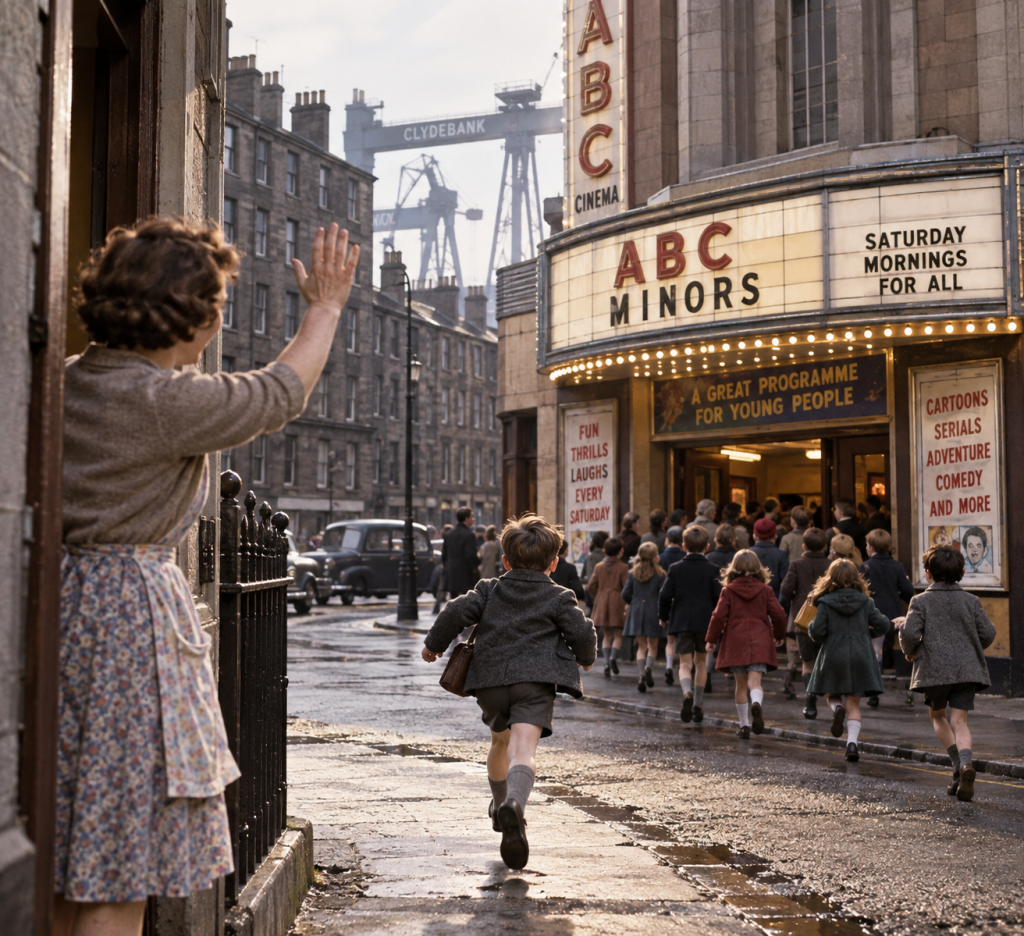
For me, that story begins in Clydebank in Scotland in the 1960s. I grew up in a poor area and, like most families around us, we didn’t have a great deal of spare money. We certainly didn’t have the endless entertainment choices available to children today, but we did have the cinema and, on Saturday mornings, we had ABC Minors.
I don’t know what it cost, but it was AMAZING as a kid.
Saturday morning at the ABC was an event. You would see other children heading towards the cinema, join the crowd going inside and wait for that wonderful moment when the lights went down. The programme could be an extraordinary mixture. You might get Jason and the Argonauts, an Abbott and Costello short and perhaps Tom and Jerry. Adventure, comedy, animation and spectacle all thrown together, with hundreds of children experiencing it collectively.
Nobody told us we were being introduced to film culture. Nobody needed to explain the importance of cinema or turn it into an educational exercise. We were simply having fun, and without realising it we were developing a relationship with the cinema that could last for the rest of our lives.
More than 60 years later, mine certainly has.
Today I run UK Film Network and UKFILM.AI, and for around 25 years I have had the privilege of voting for the BAFTAs. Film has followed me through acting, filmmaking, technology and the communities I have built around the industry. When I look back at where that enthusiasm began, however, it wasn’t at a film festival, an awards ceremony or an industry event. It was as a little boy heading excitedly to the ABC in Clydebank on a Saturday morning.
What happened to the cinema habit
The numbers provide some important context. In 1995 there were around 114.6 million cinema admissions in the UK. As multiplexes expanded and cinemas invested heavily in the experience, audiences grew substantially. By 2002 admissions had reached 175.9 million and remained around those levels for much of the following two decades.
In 2018, UK cinemas recorded 177 million admissions. In 2019, immediately before the pandemic, there were still 176.1 million.
Then everything changed. Admissions collapsed during Covid and, although audiences have returned, they have not returned with the same frequency. UK cinema admissions reached 117.3 million in 2022, 123.6 million in 2023 and 126.5 million in 2024. In 2025 they slipped back to 123.5 million.
That means British cinemas recorded more than 52 million fewer admissions in 2025 than in 2019, a fall of around 30 per cent. Perhaps even more strikingly, despite the UK population having grown considerably, the total number of cinema visits in 2025 was only around nine million higher than it had been thirty years earlier in 1995.
Cinema isn’t dead. Far from it. When the right film becomes a genuine cultural event, audiences still demonstrate their appetite for the big screen. Barbie and Oppenheimer provided spectacular evidence of that in 2023, while successful family films, franchises and event cinema continue to draw substantial crowds.
What appears to have weakened is the habit.
That distinction matters. The challenge isn’t simply persuading somebody that a particular film is worth seeing. It is making going to the cinema something people naturally think about doing again. And that is where children come in.
Creating tomorrow’s audience
A child who discovers the pleasure of cinema at five or six could potentially remain a customer for another seventy or eighty years. They may begin by going with their parents, then with friends, later with partners and eventually with children of their own.
Some will go much further. Among today’s young audiences will be tomorrow’s actors, writers, directors, producers, cinematographers, animators and cinema owners. Others will become critics, programmers, festival organisers or simply lifelong film lovers who keep buying tickets and recommending films to everyone around them.
There are already cinemas doing excellent work with younger audiences through family screenings, discounted tickets, children’s film clubs, school programmes and community initiatives. Those efforts deserve support, but I would love to see the idea become much bigger.
Imagine Saturday morning children’s cinema becoming an institution across Britain again. Not simply another showing of the week’s major children’s release, but a deliberately affordable experience designed around the sheer pleasure of going to the pictures.
The programming could be adventurous. A cartoon, a short from an emerging filmmaker and a feature. Animation alongside live action, classics mixed with new releases, and comedy, adventure and fantasy alongside films that children might never encounter through the recommendations on their home screens.
Most importantly, don’t make it feel like school. The genius of ABC Minors was that nobody had to tell us it was good for us. We went because it was fun.
Making it affordable would require imagination. Cinemas themselves cannot be expected to carry the cost when they are already dealing with rising staffing, energy and operating expenses. There is surely scope for exhibitors, distributors, studios, film organisations, local businesses and sponsors to work together. If the industry spends significant sums persuading adults to see individual releases, investing some of that thinking in creating lifelong customers seems remarkably sensible.
Something a phone cannot reproduce
Today’s children have access to more screen entertainment than any generation in history, yet the cinema can still give them something fundamentally different. Watching a film on a tablet cannot reproduce the feeling of sitting in a dark auditorium surrounded by hundreds of other children who all laugh at the same joke, jump at the same moment or fall silent together when something extraordinary appears on a huge screen. Cinema is technology, but it is also atmosphere and a shared human experience.
My Saturday mornings at ABC Minors weren’t designed as a seventy-year audience development programme. Yet that is effectively what they became. Those inexpensive cinema tickets helped create someone who would continue watching films, supporting filmmakers and eventually building communities around film.
Multiply that effect across thousands of children and cheap Saturday morning cinema stops looking like nostalgia. It starts looking like an investment in cinema’s future.
We spend a great deal of time discussing how to persuade audiences back into cinemas. Perhaps part of the answer is to create the next audience before the habit disappears altogether.
When I think about my own relationship with film, it doesn’t begin with BAFTA, UK Film Network or anything I have done professionally. It begins with a little boy in Clydebank excitedly heading off to the ABC on a Saturday morning.
More than 60 years later, I’m still going to the cinema.
If we want people filling those seats in 2050, 2060 and beyond, we need to give today’s children a reason to fall in love with the place now.
Get them through the doors, turn down the lights and let the magic do the rest.