Artificial: Andrew Garfield Takes on Sam Altman in Luca Guadagnino’s Drama About the Battle for OpenAI
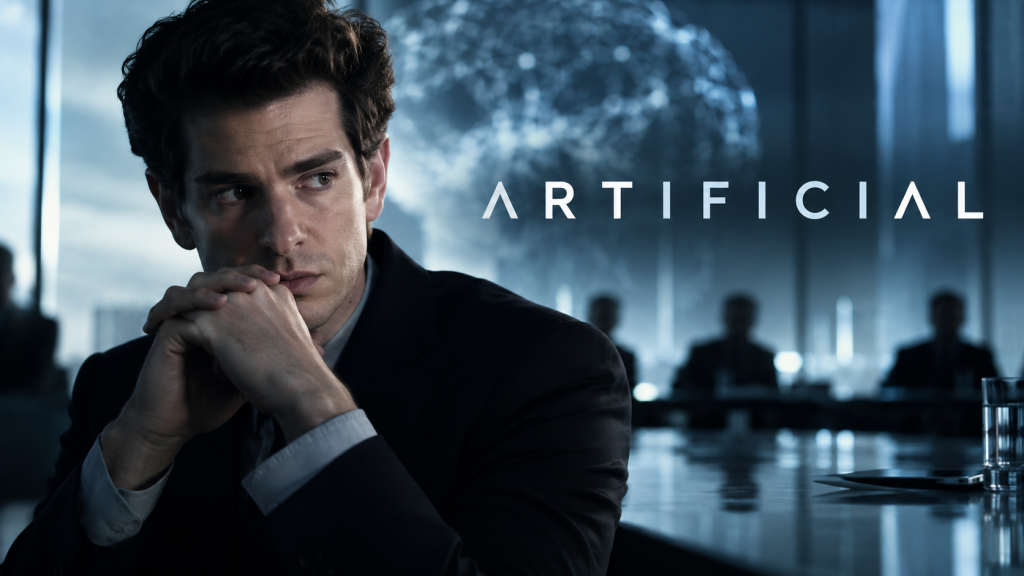
Luca Guadagnino turns one of Silicon Valley’s most extraordinary corporate power struggles into a major new drama, with Andrew Garfield starring as OpenAI CEO Sam Altman.
It lasted only a few days, but the extraordinary boardroom battle that erupted inside OpenAI in November 2023 offered a glimpse into a much bigger question: who should control artificial intelligence?
That question is at the heart of Artificial, the new film from Call Me by Your Name, Challengers and Queer director Luca Guadagnino. Written by Simon Rich, the 140-minute drama chronicles the consequential days surrounding the sudden firing and remarkable reinstatement of Sam Altman as CEO of OpenAI, the company behind ChatGPT.
Andrew Garfield plays Altman, while Anora star Yura Borisov takes the role of OpenAI co-founder and chief scientist Ilya Sutskever, one of the central figures in the events that brought the company close to collapse. Monica Barbaro portrays OpenAI executive Mira Murati, with Ike Barinholtz appearing as Elon Musk and Mark Rylance as pioneering computer scientist Geoffrey Hinton.
The film also stars Cooper Hoffman, Jason Schwartzman and Chris O’Dowd, giving Guadagnino an unusually strong ensemble for a story in which computer scientists, investors and technology executives effectively become the protagonists of a political thriller.
Watch the official teaser trailer on UK Film Network:
https://ukfilmnetwork.com/videos/artificial-official-teaser-trailer-in-cinemas-22-january/
Five days that shook Silicon Valley
On 17 November 2023, OpenAI’s board announced that Altman had been removed as chief executive, saying it no longer had confidence in his ability to lead the company. What followed was an extraordinary sequence of resignations, negotiations and attempted leadership changes as employees, investors and executives fought over OpenAI’s future.
Within days, Altman was back.
It would be easy to treat the episode simply as Silicon Valley corporate intrigue, but Artificial arrives at a moment when the consequences look considerably larger. OpenAI’s technology helped trigger the generative AI boom that has since transformed the technology industry, while governments, businesses and societies continue to wrestle with how increasingly powerful artificial intelligence should be developed and controlled.
Guadagnino and Rich use the OpenAI crisis as a way into those much larger questions. The human drama of executives turning on one another, alliances changing and a company threatening to implode provides the narrative momentum, but behind it sits an argument about the future direction of one of the most consequential technologies of the modern era.
The story also stretches beyond those few frantic days, exploring the relationships and ideas that preceded the crisis and the development of the technology that ultimately placed OpenAI at the centre of a global AI race.
Andrew Garfield as Sam Altman
Garfield’s casting is particularly intriguing. Rather than simply presenting Altman as another Silicon Valley entrepreneur, Artificial has the opportunity to explore a figure who became one of the most recognisable and influential people in technology almost overnight.
The bigger challenge will be avoiding the temptation to divide the story neatly into heroes and villains. The OpenAI drama was complicated precisely because the people involved appeared to have profoundly different ideas about the responsibilities that come with developing increasingly powerful artificial intelligence.
Yura Borisov’s Sutskever may therefore prove every bit as important as Garfield’s Altman. Following his acclaimed performance in Anora, Borisov takes on a character whose concerns about the direction and governance of AI place him at the centre of the conflict.
The relationship between Altman and Sutskever embodies one of the fundamental tensions surrounding artificial intelligence: the clash between accelerating the development and commercialisation of the technology and concerns about what happens if increasingly capable AI systems develop faster than humanity’s ability to understand or control them.
When the boardroom becomes a thriller
There is an obvious comparison with The Social Network, another film that transformed meetings, contracts, betrayals and arguments between technologists into compelling cinema. But Artificial potentially has something even more unsettling working in its favour.
The consequences of the story remain unresolved.
The rise of Facebook depicted in The Social Network had already happened by the time David Fincher’s film arrived. Artificial, by contrast, is being released while the technological revolution at the centre of its story is still accelerating.
Generative AI is moving into filmmaking, music, software development, medicine, education, banking, defence and almost every other major industry. Governments are attempting to regulate it. Technology companies are spending enormous sums building the computing infrastructure required to develop it. At the same time, arguments continue about employment, copyright, misinformation, safety and whether future AI systems could eventually become more capable than the humans who created them.
That makes the events inside OpenAI more than an intriguing piece of corporate history.
They become part of a much larger argument about power.
Hollywood turns its attention to AI
Cinema has always been fascinated by artificial intelligence, but usually as science fiction. From HAL 9000 and Blade Runner to The Terminator, Ex Machina and Her, filmmakers have imagined what might happen when machines begin thinking for themselves.
Artificial approaches the subject from the opposite direction.
There are no killer robots required. Instead, the drama takes place in offices, boardrooms, laptops, phone calls and private conversations between the relatively small group of people responsible for building the technology.
That may ultimately make it more unsettling.
The central question is not whether artificial intelligence will become powerful. It is who gets to decide how that power is developed, who benefits from it and what safeguards should exist when commercial ambition collides with concerns about safety.
Guadagnino is also an intriguing filmmaker to tackle the material. His best work is driven less by conventional plot mechanics than by relationships, ambition, obsession and shifting power between characters. Those qualities could make the strange five-day battle for OpenAI considerably more cinematic than the phrase “corporate governance crisis” might suggest.
The story is still being written
Perhaps the most fascinating thing about Artificial is that nobody yet knows how the wider story ends.
Sam Altman remains one of the defining figures of the AI era. OpenAI remains at the centre of the global competition to develop increasingly capable artificial intelligence. Technology companies, governments and investors are committing extraordinary resources to the field, while the public is experiencing the consequences in real time.
That gives Artificial an unusual immediacy.
This isn’t cinema looking back on a settled piece of history. The history is still being written.
The OpenAI crisis provides the drama, but underneath it sits a question likely to become increasingly important over the coming decade: when a small number of companies are developing technology capable of affecting billions of people, who gets to decide what happens next?
For once, the boardroom really might contain the fate of the world.
Artificial
Directed by: Luca Guadagnino
Written by: Simon Rich
Produced by: Simon Rich, David Heyman, Jeffrey Clifford, Jennifer Fox and Luca Guadagnino
Starring: Andrew Garfield, Yura Borisov, Monica Barbaro, Cooper Hoffman, Jason Schwartzman, Chris O’Dowd, Ike Barinholtz and Mark Rylance
Running time: 140 minutes
Rating: TBC
UK & Ireland cinema release: 22 January 2027
Watch the official teaser trailer:
https://ukfilmnetwork.com/videos/artificial-official-teaser-trailer-in-cinemas-22-january/